
Nordic Collaboration Sparks New Research on VR in Healthcare
What began as a joint exploration of how new technology can be used in healthcare has now evolved into a research project at Halmstad University. After piloting a VR solution for children with needle anxiety across several care units in Halland, Leap for Life is now taking the next step.
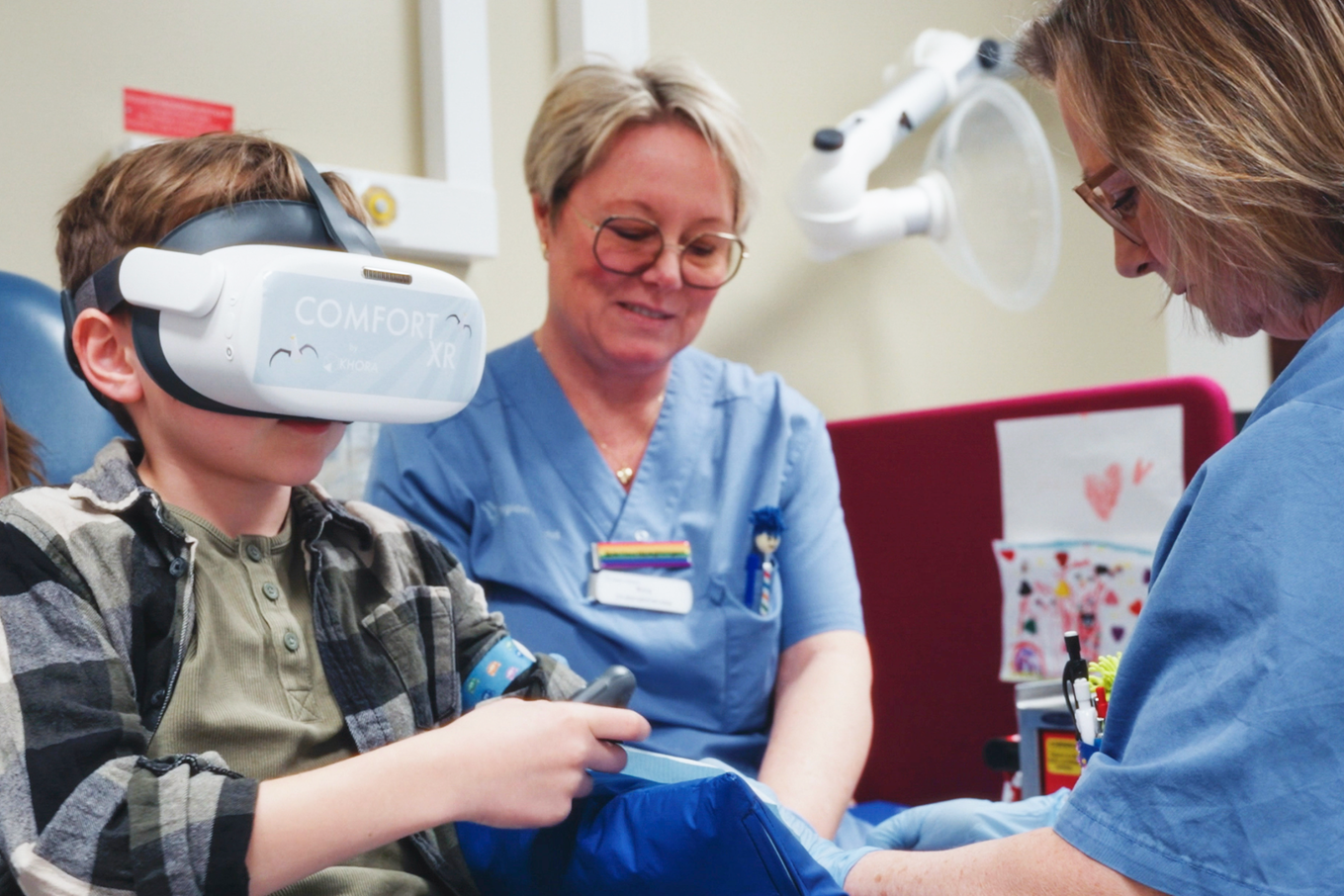
Through a partnership with the Danish company Khora Virtual Reality, Region Halland gained the opportunity in early 2025 to trial a unique VR solution. The technology, which is currently being tested at five primary care centres and three units within the paediatrics department in Halland, aims to reduce fear and discomfort among children who are anxious about needles and to help create a more positive care experience. The evaluation of the pilot project, managed by Leap for Life, will form the basis for Region Halland’s decision on whether to proceed with full implementation next year.
“It’s fantastic that we’ve been able to support Region Halland from the moment they identified a need for this solution, all the way to it now being tested across multiple care units throughout Halland. At the same time, we have the opportunity to conduct research on the actual benefits of the solution, which can help other regions learn from our findings,” says Virginia Wiman, Project Manager at Leap for Life.
Research driven by children’s perspectives
The starting point for launching a research project was a knowledge review in which Leap for Life mapped the methods healthcare professionals use to distract and alleviate pain for children during needle-related procedures. The review showed that most distraction methods are effective, and that VR often yields positive results, although existing research is not yet fully aligned.
Based on these findings, Leap for Life identified a clear need for more in-depth research — particularly to understand how VR works in practice and how children themselves experience the technology. To capture children’s own perspectives on the value of the VR solution as a distraction method, we have now initiated a research project, VR as a Distraction Tool for Children during Medical Procedures. The project will examine whether VR technology can genuinely reduce anxiety during, for example, blood tests and vaccinations. In the first phase, in-depth interviews will be conducted with children to capture their experiences. The next phase will gather parents’ perspectives through surveys, followed by interviews with healthcare staff.
The research team is led by Britt-Mari Gilljam, a paediatric nurse by training and a researcher at Halmstad University. Her research focus—children’s participation in healthcare—aligns closely with the project’s ambition not only to reduce anxiety, but also to strengthen children’s ability to have a voice in their care experience.
The results of the research will form the basis for recommendations on how VR solutions can be used safely, inclusively and in a child-centred way, and will ultimately contribute to strengthening children’s participation in healthcare both in Halland and in other regions.
“Collaborations like this, where development and research go hand in hand, are essential for driving healthcare forward”
Peter Uppman, Innovation Strategist at Region Halland
Collaboration that drives development forward
The VR initiative is the result of a Nordic collaboration, CareWare Nordic, where companies, regions and innovation arenas work together to develop digital solutions that strengthen welfare services. Within the project, experiences are shared, new ideas are tested, and knowledge is created that can benefit many more.
“The EU-funded CareWare Nordic project demonstrates how collaboration across countries and organisations can create real change. Now that we’ve had the opportunity to test innovative solutions within the region, we can see that VR technology has significant potential to enhance healthcare here in Halland. Collaborations like this — where development and research go hand in hand — are essential for driving healthcare forward,” says Peter Uppman, Innovation Strategist at Region Halland.
Collaboration that drives development forward
Peter Uppman, Innovation Strategist
The VR initiative is the result of a Nordic collaboration, CareWare Nordic, where companies, regions and innovation arenas work together to develop digital solutions that strengthen welfare services. Within the project, experiences are shared, new ideas are tested, and knowledge is created that can benefit many more.
“The EU-funded CareWare Nordic project demonstrates how collaboration across countries and organisations can create real change. Now that we’ve had the opportunity to test innovative solutions within the region, we can see that VR technology has significant potential to enhance healthcare here in Halland. Collaborations like this, where development and research go hand in hand, are essential for driving healthcare forward,” says Peter Uppman, Innovation Strategist at Region Halland.
About CareWare Nordic
The research project is initially funded by CareWare Nordic 2, a collaboration between Nordic actors in the health and welfare sector. The project is funded by Interreg Öresund-Kattegat-Skagerrak and aims to promote the sharing and testing of innovative technologies across national borders. It demonstrates how joint Nordic initiatives can translate digital innovation into tangible improvements in health and social care.
Publicerat den