
Creating Value Through Cross-Border Collaboration
Dialogue tools that open up conversations about welfare technology, VR solutions that reduce children’s anxiety in healthcare settings, and virtual training environments for the healthcare workforce of the future. As CareWare Nordic 2 has come to an end, it is clear that three years of cross-border collaboration have resulted in concrete solutions that deliver genuine value in health and social care.
Over the past three years, CareWare Nordic 2 has brought together eight partners from Sweden and Denmark to address shared challenges at the intersection of needs, technology and practice. By working closely with frontline services, the project has created space to test ideas in real-world settings, learn from one another and develop solutions that are genuinely usable in practice.
“When different areas of expertise and organisations come together across national borders, something important happens. We have learned a great deal from one another, and the collaboration has led to solutions that deliver tangible benefits, both in Sweden and Denmark,” says Anna-Karin Holst Johannsen, Project Manager for CareWare Nordic 2.
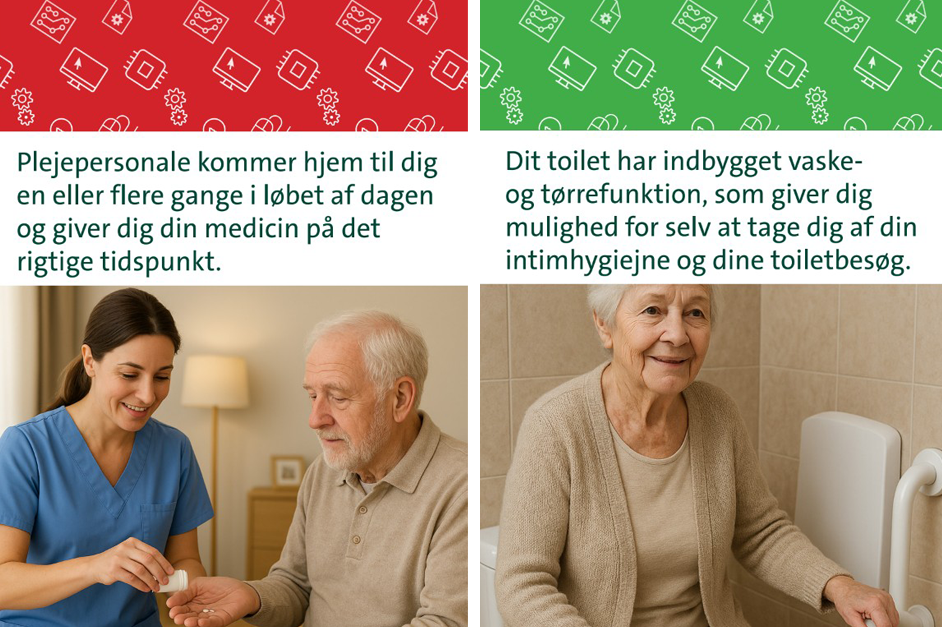
The dialogue tool is used in Viborg Municipality to facilitate discussions about when welfare technology adds value and when human presence is most important.
Dialogue Tool in Practice
One concrete activity within the project has been a dialogue tool developed by Leap for Life and later further developed and adapted by Viborg Municipality. The tool serves as a practical conversation starter around welfare technology and is used to discuss when digital solutions create value and when human interaction is most crucial. After its successful introduction in the Halland region, Viborg Municipality brought the tool to Denmark and adapted it for use across additional service areas within the municipality. The dialogue tool attracted significant attention at the Digitek Days in autumn 2025.
VR Reducing Anxiety and Building Knowledge
Another example of how cross-border exchange can lead to both practical benefits and new knowledge is the work with VR solutions for children who are afraid of needles. Through collaboration with the Danish company Khora Virtual Reality, Region Halland tested a VR solution that is already in use within the Danish healthcare system. The technology was tested in both Swedish primary care and specialist care, with the aim of creating safer and more reassuring healthcare encounters for children — and the results were highly positive.
Leap for Life played a central role in this work by leading the evaluation of the pilot. The evaluation showed that children, guardians and healthcare staff all rated the use of VR as a distraction method during care encounters very positively.
Following the pilot period, Region Halland has decided to continue using the VR solution at the three units of the Paediatric and Adolescent Clinic in Halland, as well as at five primary healthcare centres across the region.
The Interreg project also made it possible to initiate a research project at Halmstad University to investigate how VR functions as a distraction method in healthcare situations and how children themselves experience the technology.
“I didn’t even notice the needle, even though they did it outside the EMLA patch. Really fun and very distracting.”
— A child who tried the VR solution
Virtual Learning Environments for the Healthcare Workforce of the Future
A third activity worth highlighting concerns how VR has become a bridge between education and clinical practice. Through collaboration between SOSU School East Jutland, Halmstad University, Leap for Life and the company AATE VR, VR-based training modules have been transferred from Danish vocational education to Swedish higher education. Following joint development, the technology is now used in the nursing programme at Halmstad University, enabling students to practise complex situations in a safe environment — such as prioritising patients on a busy hospital ward, medication management and learning human anatomy.
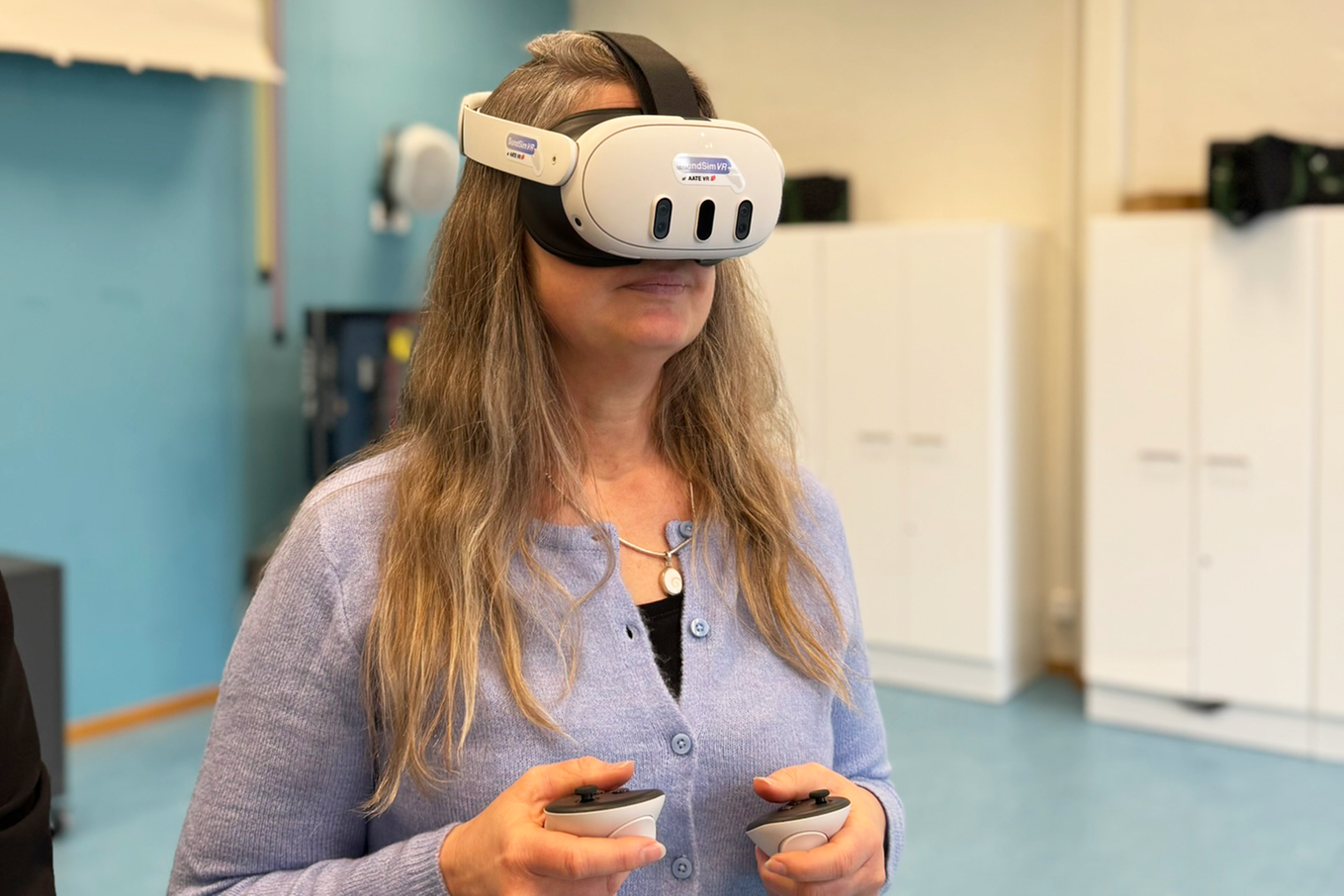
With the help of VR, nursing students at Halmstad University can practise complex situations in a safe environment, such as patient prioritisation, medication management and human anatomy.
Lasting Impact Beyond the Project
In addition to these examples, CareWare Nordic 2 has contributed to broad skills development and the creation of new collaborations. More than 1,500 people have participated in project activities, and a large number of companies and organisations in both Denmark and Sweden have strengthened their capacity for innovation and digital development. The experience clearly demonstrates that cross-border collaboration creates better conditions for turning ideas into real-world impact.
“As CareWare Nordic 2 now concludes, its results live on in the form of new ways of working, strengthened competencies and relationships that continue to develop. The project is a living example of how shared learning can make a real difference in health and social care,” Anna-Karin concludes.
Publicerat den